
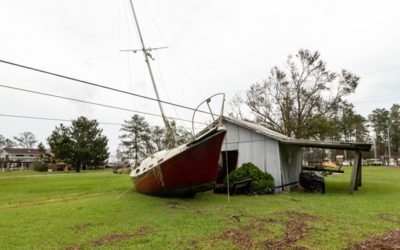
A $1.99 million NSF grant supports an interdisciplinary disaster research project at UD.
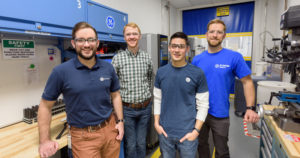
UD engineering graduates working for GE Aviation in Newark include (left to right) Sam Kurkoski, Reid Bremble, Vince Uathavikul and Tyler Walker.
A $1.99 million NSF grant supports an interdisciplinary disaster research project at UD.
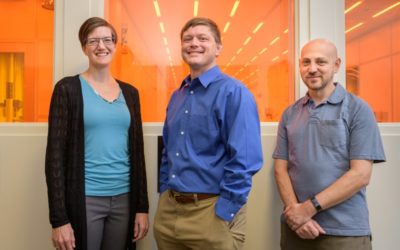
UD received a $1 million grant from the National Science Foundation to help develop the quantum electronics of the future.
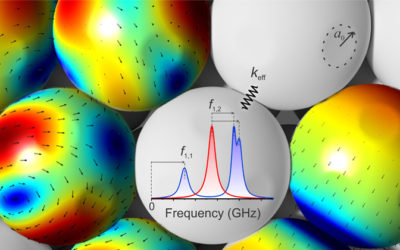
A chemical engineering doctoral student led an international effort to uncover properties of polymer nanoparticles.
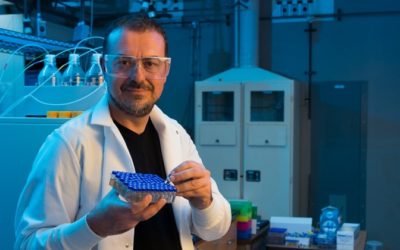
The University of Delaware has won a $12.8 million, four-year funding renewal from the U.S. Department of Energy for the continued operation of the Catalysis Center for Energy Innovation (CCEI).
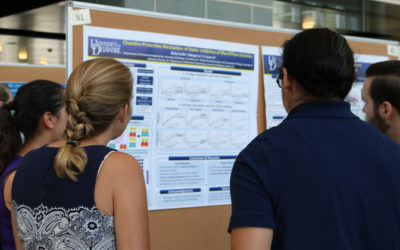
NSF has awarded funding to the University of Delaware’s Center for Biomechanical Engineering Research (CBER) to be a Research Experience for Undergraduates (REU) site through 2021.

The U.S. Department of Energy has awarded Eleftherios (Terry) Papoutsakis a three-year, $1.5 million grant to study the production of clostridium bacteria as platforms for biofuels.
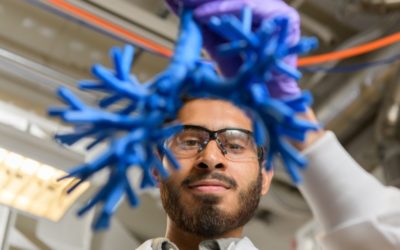
Azeem Sharief, a chemical engineering major, is interested in how inhaled medication is delivered to lung tissue.
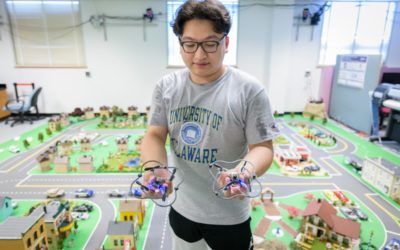
Yiming Wan is studying the use of drones in combination with smart or autonomous vehicles to optimize traffic flow.
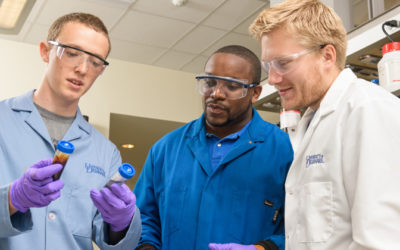
UD is part of a national push to double U.S. energy productivity by the year 2030 through new research projects funded by the Rapid Advancement in Process Intensification Deployment (RAPID) Manufacturing Institute.
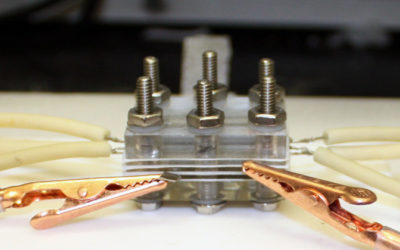
A team of researchers at the University of Delaware’s Center for Catalytic Science and Technology (CCST) has discovered a novel two-step process to increase the efficiency of carbon dioxide (CO2) electrolysis.

Senior environmental engineering major Michael Rechsteiner researches biochar and how it can help sustain our environment.
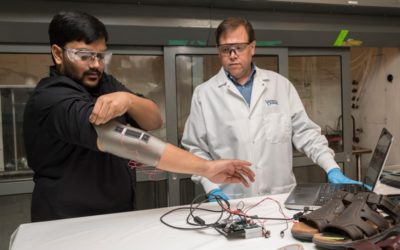
Delaware engineers are using flexible carbon nanotube composite coatings to create next-generation smart textiles with the ability to measure a wide range of pressures.