

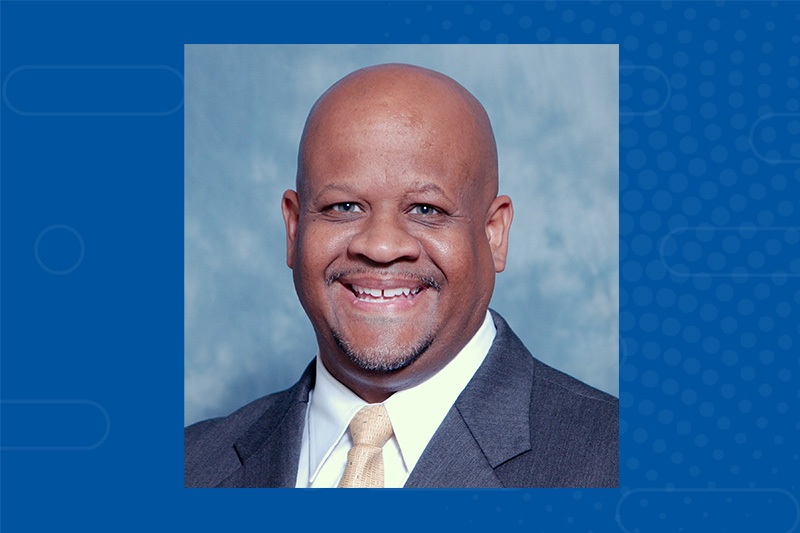
RISE helped William Reynolds navigate a challenging and nontraditional path to engineering.
Reynolds came to UD from Howard High School, a vocational school, and was not admitted directly into an engineering program. At the time, transfers into engineering were not common, and to Reynolds it seemed virtually impossible. He sought guidance from Terry Whittaker, then director of RISE, who laid out a plan. After a year and a half of persistence, Reynolds became an electrical engineering major in the spring semester of his sophomore year and officially joined RISE.
He went on to earn his bachelor’s and master’s degrees in electrical engineering from UD and later completed his doctorate at the University of Illinois Chicago. His career has spanned the commercial and government sectors, with work ranging from software development to national defense. In 2020, he founded Onda Vision Technologies, a North Carolina State University spinout company developing wearable technology to monitor changes in the body’s hydration state. Reynolds credits RISE with helping him gain entry into engineering and preparing him to succeed.
How did you engage with RISE once you became an official member?
I had already built friendships with many RISE students through classes, but I became more involved once I started attending meetings and workshops. I also connected with the broader engineering community by joining the National Society of Black Engineers.
The community was strong, and it has stayed with me. I’ve remained in touch with many people from RISE, and some friendships have lasted throughout our careers. We’ve followed each other’s paths and supported one another along the way.

RISE Electrical Engineering students L to R: Charles Johnson-Bey, the late Matthew Brown, William Reynolds, David Hinds
How did RISE help prepare you for the transition from student to professional?
RISE gave us a well-rounded experience both inside and outside the classroom. Beyond supporting us through a rigorous academic program, they gave us practical professional training. I remember etiquette classes that covered how to conduct yourself at a business lunch or dinner: what to wear, which spoon to use and not starting your meal before everyone is served. We were young and had no idea how to navigate a corporate setting, so that preparation was very helpful.
What advice do you have for current engineering students?
First, you have to put the time into your studies. Engineering does not see time; it only sees results. Second, have fun! Your time at UD does not last forever. I didn’t go to all the parties, but I went to a lot of them. Still, people knew they were most likely to find me in the library; I’d often get there when it opened and leave when it closed. Plenty of activities compete for your time, so you have to be disciplined if you want to get the most out of your education.
Keep your mind open about what comes next. When we were students, the business side of engineering wasn’t emphasized, and there wasn’t much talk about start-ups. Today, there’s much more encouragement to turn what you’re building into something of your own, and the cost of starting a business is much lower than it used to be. Think about how you might take advantage of that. The corporate path is always there, but it’s not the only option.
Remember, “the only limitations that exist are the ones we self-impose.”